
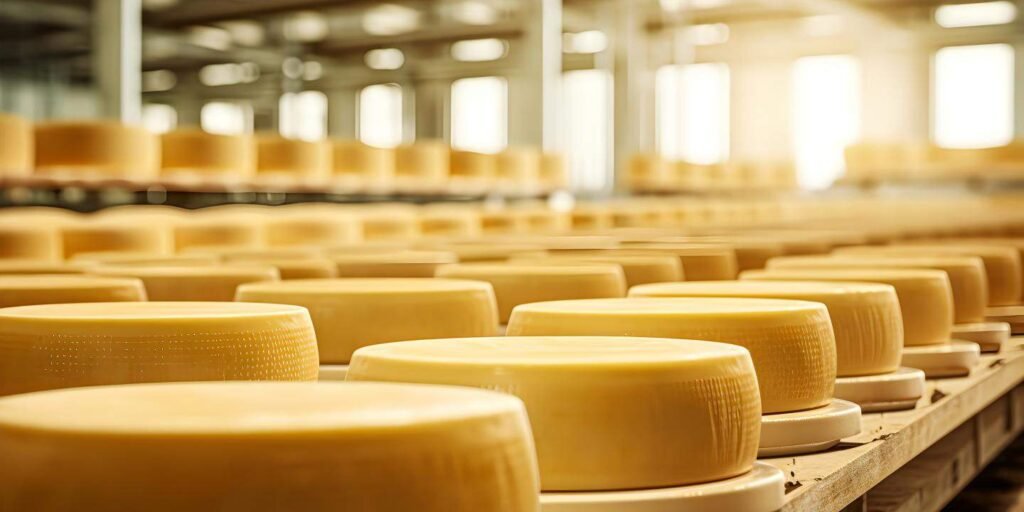
Between FDA’s 60 day raw milk rule, 50 different cottage food laws, and a traceability mandate that just moved to 2028, the legal ground under a cheese storefront shifts by the state, and sometimes by the week.
In March 2026, a Fresno cheesemaker recalled its raw cheddar under protest in the middle of an FDA and CDC outbreak investigation tied to nine E. coli illnesses across three states. Three states over, a home producer had just gained the legal right to ship that same category of product across state lines for the first time in that state’s history. Both operators were working under the same federal law. That gap, between one federal floor and fifty different state ceilings, is the part of selling cheese online that rarely makes it into a business plan, and it’s the part that determines whether a storefront can actually fulfill the orders it takes.
The 60 Day Rule Nobody Reads Until It’s a Problem
Federal cheese regulation starts with a single number: 60 days. Since 1949, FDA has used standards of identity codified at 21 CFR §133 to prohibit the interstate sale of any cheese made from unpasteurized milk unless it has been aged at least 60 days at a temperature no lower than 35°F. The rule survived a 1987 reaffirmation and has held for nearly four decades, which makes it one of the more stable pieces of this whole picture. It also means the aging clock, not the recipe or the milk source, is what determines whether a raw-milk cheese can legally cross a state line at all. The 60 day aging rule is the one raw-dairy exception to the interstate ban, but selling raw fluid milk online is a different fight entirely, what the 2026 FDA crackdown on shipping raw milk actually targets.
What trips up newer sellers is assuming that clock is the whole story. Sixty day aging clears the federal bar. It does not clear the state bar, and the two are not the same conversation. A cheese that satisfies the federal aging requirement can still be illegal to ship from a state that restricts raw dairy sales, or into one that bans them outright. The National Agricultural Law Center’s 2025 update puts a number on that split eighteen states currently ban the sale of raw milk outright, while thirty two allow it under varying conditions. Cheese inherits that same patchwork, layered on top of the federal aging rule rather than replacing it.
This is also where the FDA’s jurisdiction quietly narrows. FDA has consistently declined to extend its interstate ban into intrastate sales, reasoning that an intrastate ban wasn’t necessary to enforce the interstate one. In practice, that means a state can be more permissive than the federal government inside its own borders while still being bound by the 60-day rule the moment a product ships out.
Grade A, Manufactured Product, or Neither Picking Your Regulatory Lane
Most artisan cheesemakers assume there’s one license to get. There are, realistically, three separate lanes, and which one applies depends on decisions made long before the storefront goes live, not after the first order ships.
The first lane is Grade A licensing under the Pasteurized Milk Ordinance, overseen through the National Conference on Interstate Milk Shipments, a cooperative federal state program that all fifty states, the District of Columbia, and U.S. territories participate in. Grade A status is the prerequisite for interstate distribution of milk and most milk products, and it comes with real, recurring overhead: inspections roughly every six months, an additional rating inspection every eighteen months, and facility design standards that a farmstead operation has to build toward from the start rather than retrofit after the fact. This isn’t a one time application. It’s an ongoing relationship with a state inspector and, indirectly, with FDA, which retains veto authority over PMO amendments after conferring with the NCIMS Executive Board. For raw-milk cheesemakers, the sourcing decision is also a positioning one, how to build a dairy brand that converts both raw milk and pasteurized audiences in a post H5N1 market
The second lane sits outside Grade A entirely, and it’s the one that actually covers most artisan cheese. According to the Real Milk / Weston A. Price Foundation’s summary of state raw milk statutes, butter and cheese fall outside the PMO’s definition of milk products. They’re classified as manufactured milk products rather than Grade A products, and they’re generally regulated under a state’s separate dairy manufacturing laws. A farmer can often sell raw cheese, provided it meets the federal aging rule, once they hold a manufacturing plant license from their state, which is a different application, a different inspection regime, and often a different state agency than the one handling Grade A dairy certification. Sellers frequently discover this distinction only after applying to the wrong office.
The third lane is cottage food, and it applies to far fewer cheesemakers than the phrase suggests. That’s worth its own section, because the assumption that cottage food covers cheese is where a lot of new sellers go wrong first, sometimes after they’ve already built a storefront around it.
License Type Comparison
| License type | Who typically qualifies | Interstate shipping | Inspection cadence |
|---|---|---|---|
| Grade A / PMO | Dairy operations selling nationally or to large distributors | Yes, with certification | Roughly every 6 months, plus 18 month rating |
| State manufacturing plant license | Farmstead cheesemakers, including raw milk producers meeting the 60-day rule | Yes, within federal aging limits | Varies by state |
| Cottage food | Home producers of low-risk, typically non perishable foods | Rare, and usually intrastate only | Varies, several states now require none |
Why Cottage Food Law Is (Mostly) a Trap for Chees
Cottage food laws exist to let home producers sell low risk foods without a commercial kitchen or a health department inspection. The category was built around jams, baked goods, and dry mixes shelf stable products with no meaningful bacterial growth risk sitting at room temperature. Most artisan cheese is a TCS food, time and temperature control for safety, which puts it outside that category by design in the majority of states, regardless of how the product is aged or packaged.
The exceptions exist, and they’re expanding fast enough that a rule read six months ago may already be out of date. According to a 2026 state by state cottage food guide from PermitDeck, North Dakota and Montana legalized interstate cottage food sales in March 2025 under SB 2386, an unusual move that puts them among the only states in the country allowing it at all. Georgia eliminated its cottage food licensing requirement entirely as of July 1, 2025 under HB 398, moving it in one legislative session from a moderate restriction state to one of the more permissive in the country. Hawaii’s HB 2144 added acidified and fermented foods, plus limited wholesale rights for non-TCS products, effective that August. Food-freedom states like Wyoming and Utah go further still, permitting some dairy products under conditions that don’t exist in a standard cottage food framework, with Utah running parallel tracks: an unrestricted Food Freedom Act lane alongside a traditional, capped cottage food option.
None of that changes the baseline for a typical fresh or semi soft cheese operation in most states: cottage food is not the license, and the states where it might apply are a short, fast moving list rather than a default assumption a business plan can lean on. A seller building a multi state shipping strategy around cottage food eligibility is building it on ground that’s still shifting session to session.
FSMA 204 Just Moved Its Own Goalposts
If a seller had spent 2025 preparing for a January 2026 traceability deadline, that date no longer exists. FDA’s Food Traceability Rule, known as FSMA 204, requires enhanced recordkeeping for foods on its Food Traceability List, and soft and semi soft cheeses, including ricotta, feta, blue cheese, mozzarella, and brie, are named on that list. Hard cheeses are not covered, which means the rule’s reach depends on a product by product classification rather than a blanket cheese category. Because soft and semi-soft cheeses sit on the FSMA 204 traceability list, the recordkeeping has to live inside fulfillment, not beside it, building lot level traceability into a subscription cold chain workflow is how operators avoid a costly retrofit later.
The compliance date was originally set for January 20, 2026. On August 7, 2025, FDA published a Federal Register notice extending that deadline by thirty months, to July 20, 2028. Congress then made the extension binding that November through the Continuing Appropriations Act of 2026, which directed FDA not to enforce the rule before the new date. FDA’s own guidance during this period has continued to narrow specific exemptions rather than pause entirely, including a finalized carve out for Grade A cottage cheese listed on the Interstate Milk Shippers list, which signals the agency is still actively shaping who this rule applies to even while enforcement sits on hold. That same traceability obligation is also a market opportunity, how DTC dairy brands turn FSMA 204 readiness into a transparency led market share advantage.
For a small cheese operation, the extension isn’t a reason to shelve the project. It’s a reason to build the system once, on a manageable timeline, instead of retrofitting it under deadline pressure later. The requirement itself is about lot level visibility: capturing key data elements, like lot codes, quantities, unit measures, and dates, at each critical tracking event as a product moves through receiving, transformation, and shipping, then producing that data as a sortable electronic spreadsheet within 24 hours of an FDA request. For an online cheese seller, that means the traceability system has to talk to the fulfillment and order management system directly, not sit next to it as a separate spreadsheet somebody updates when there’s time.
What Actually Happens When Cheese Crosses a State Line
Once a license is in place, shipping introduces its own layer of state-by-state variation, and this is the layer that tends to surface only when an order gets flagged, returned, or questioned, because it rarely shows up clearly in a single source the way federal rules do.
Cold chain documentation is the first practical hurdle. A perishable, TCS cheese shipped outside a controlled retail environment typically needs packaging and transit time validated against a temperature standard, and some state agriculture departments require that documentation be available on request, separate from whatever the carrier itself tracks. Meeting the 60 day rule clears the federal bar for cheese, but shipping introduces a second layer: the state by state map of which dairy products each state will actually accept inbound. Carrier selection matters here too: a standard parcel carrier moving a soft cheese cross country on a multi day ground route is a different risk profile, and sometimes a different compliance question, than an overnight or regional cold chain specialist.
Then there’s the receiving state’s own rules layered on top of the federal interstate framework. A product that’s fully compliant to package and ship from a manufacturing licensed facility in one state can still require additional documentation, or be flatly restricted, depending on the destination state’s dairy or raw food statutes, particularly for raw milk products. A seller shipping nationally is effectively managing compliance against the most restrictive state among their customer base, not just their own state’s rules, which is a very different planning exercise than a single state operation faces.
Labeling Isn’t One Rule, It’s a Stack of Rules
Labeling compliance for cheese isn’t a single checklist item. FDA’s standards of identity under 21 CFR §133 set baseline requirements for how a cheese can be named and described, which constrains marketing language as much as it constrains technical accuracy. States then layer their own disclosure requirements on top, particularly for raw milk products, and the specific statement required often depends on whether the product was made under a manufacturing plant license or, in the narrow states where it applies, a cottage food exemption. Cottage food labeling statements alone vary in exact wording from state to state: some require a disclosure that the product was made in a home kitchen not subject to state inspection, others require contact information and a full ingredient and allergen list, and the required point size and placement of that text differs by jurisdiction as well.
Allergen disclosure requirements follow a similar pattern: federally consistent at the base, with state specific wording requirements that vary enough to matter for a multi state seller managing label templates across SKUs. A cheese business selling into a dozen states isn’t managing one label. It’s managing a template with conditional logic built in.
What the 2025 to 2026 Recalls Actually Teach an Online Seller
The past year of cheese recalls reads less like news and more like a checklist of what can go wrong operationally, and the specifics matter more than the headline count. In December 2025, the Ambriola Company recalled cheese products distributed nationwide to retailers and distributors after routine testing found Listeria monocytogenes, a recall that expanded to include additional products made at the same New Jersey facility as a precaution, and was later raised to FDA’s highest risk classification. Boss Dairy Farms recalled a lot of cheddar the same month for the same organism, distributed within a single state. Both cases share a pattern worth sitting with: the trigger was internal testing catching contamination before it became a documented outbreak, which is the traceability and quality control system working as intended rather than failing.
The Raw Farm case played out differently, and less cleanly. FDA and CDC closed a multistate E. coli O157:H7 outbreak in spring 2026 linked to raw cheddar sold nationwide, after the company initially resisted a voluntary recall before issuing one under protest, saying it wanted to chart a path forward. Nine illnesses were confirmed across three states, with genetic sequencing tying them to a common source, exactly the kind of cross state pattern that lot level traceability is built to catch faster than a company waiting on inspection results. For an online seller, the lesson isn’t about raw milk specifically. It’s that recall response time and retailer chargeback exposure are now measured against a traceability standard regulators clearly expect operations to meet, deadline extension or not, and a slow or contested recall response carries its own reputational cost independent of the underlying safety finding.
FAQS
Can I ship raw milk cheese across state lines?
Only if it meets the federal aging requirement of 60 days at a minimum of 35°F under 21 CFR §133. Meeting that requirement clears the federal bar, but the shipping and receiving states may still impose their own restrictions on top of it, and eighteen states currently ban raw milk sales outright.
Does cottage food law cover selling cheese?
Rarely. Most cottage food laws exclude TCS foods like fresh and soft cheese by design. A small number of states, including Wyoming, Utah, North Dakota, and Montana, have expanded cottage food or food freedom laws to cover some dairy products, but this remains the exception rather than the rule, and the list of exceptions is still changing year to year.
Do I need a license to sell cheese online?
Almost certainly yes, and which license depends on whether the operation is pursuing Grade A/PMO certification for interstate distribution or a state manufacturing plant license for smaller scale production. Cottage food registration is not a substitute for either in most states.
What is FSMA 204 and does it apply to my cheese?
FSMA 204 is FDA’s Food Traceability Rule, requiring enhanced lot level recordkeeping for foods on the Food Traceability List. Soft and semi-soft cheeses are covered; hard cheeses are not. The compliance date was extended from January 2026 to July 20, 2028, though FDA continues to refine specific exemptions in the meantime.
Why do cheese laws differ so much by state?
Federal law sets a floor, primarily through the interstate raw milk cheese aging rule and FDA’s standards of identity, but states independently regulate raw milk sales, dairy manufacturing licensing, and cottage food eligibility. That combination produces fifty distinct rulesets sitting on top of one federal baseline, and several of those rulesets changed within the past year.
Conclusion
The right starting question isn’t what license do I need. It’s a sequence, and each answer narrows the next step, which makes this the section worth returning to before a platform or fulfillment partner gets chosen rather than after.
1. Is the product raw milk or pasteurized?
Raw milk cheese must meet the 60 day, 35°F aging rule before it can move interstate at all. Pasteurized product skips that constraint but still needs a licensing lane, so pasteurization simplifies one problem without eliminating the licensing question entirely.
2. Is it fresh, soft, or aged?
Soft and semi soft cheeses fall on FDA’s Food Traceability List. Aged hard cheeses currently do not, which changes the recordkeeping burden even before the 2028 deadline arrives, and it’s worth confirming which category a specific product falls into rather than assuming based on how it’s marketed.
3. What’s the shipping radius?
Intrastate only sellers have meaningfully more room, including in the small number of states where cottage food now covers some dairy. Interstate sellers are working against the federal floor plus whichever state among their customers has the most restrictive rules, which in practice means designing for the strictest case, not the average one.
4. Which licensing lane actually fits, Grade A, manufacturing plant, or (rarely) cottage food?
This is the point where the answers to questions one through three should point clearly to one of the three lanes covered earlier, rather than leaving it as an open question to resolve during the application itself.
5. Does the traceability system already capture lot-level data?
If not, this is the moment to build it, with a 2028 deadline rather than a live one, instead of retrofitting it after a recall forces the question under pressure. A seller who works through that sequence before choosing a platform or a fulfillment partner ends up with a license application that matches their actual product, instead of one they discover doesn’t after the paperwork is already in.
