
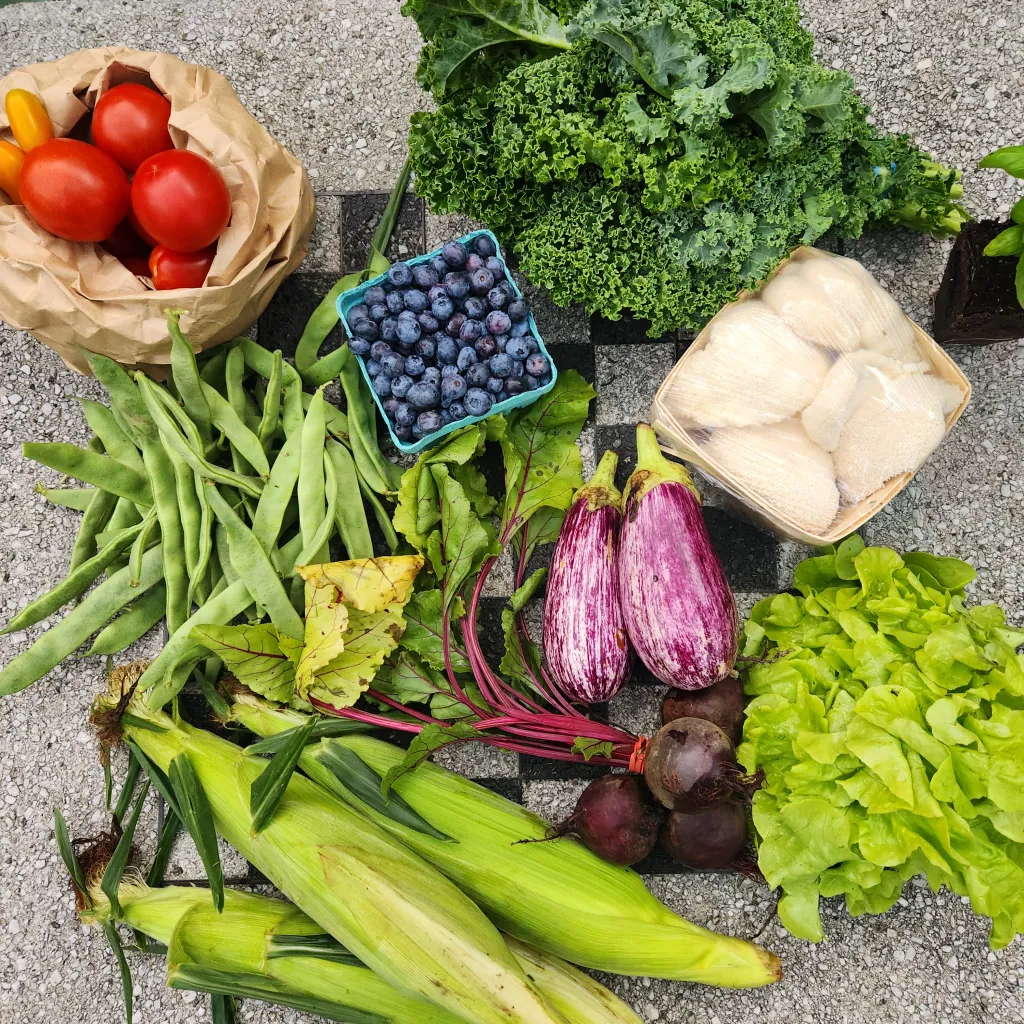
You’re farming well. Your produce is fresh, your customers love you, and your CSA model gives you upfront cash flow. And you’re making $25,000–$30,000 annually from your CSA program. Except you’re watching farms down the road with similar land, similar climate, similar member counts doing $60,000–$80,000. The difference isn’t their farming. It’s their positioning. Traditional boxes of veggies. CSA positioning worked great in 2010. It still works. But it doesn’t grow anymore. The market has moved. Your customers have moved. And your revenue model hasn’t.
- 70% of CSA Members Prefer Customizable Boxes Yet only 30–40% of farms offer any choice in what members receive, leaving a massive positioning gap
- 25% Retention Boost LocalHarvest member data shows customizable boxes drive 25% higher retention compared to static weekly box models
- 45% Market Dominance, Zero Growth Traditional vegetable CSA represents 45% of the $225M+ U.S. CSA market but faces flat to declining growth while diversified models expand rapidly
- $30K–$80K Revenue Gap A 50 member CSA farm making $30,000–$50,000 with traditional commodity positioning can break through to $50,000–$80,000+ with premium, customized, value add positioning
Key takeaways:
- Traditional boxes positioning hits revenue ceiling around $25K–$30K, premiumization and customization break through to $50K–$80K+
- 70% of CSA members actively prefer customizable boxes, only minority of farms offer choice
- Value added products and artisan collaborations command 20–30% price premiums while reducing customer churn.
The Positioning Trap, Why Traditional CSA Models Are Revenue Capped
The traditional CSA model was revolutionary in 2000. Farmers gained cash flow certainty by collecting upfront seasonal payments from members. Customers gained direct access to fresh local produce without middlemen markup. The model scaled because it solved real problems for both sides. It was innovative, trust based, and community driven.
That positioning advantage, fresh local vegetables, community connection, support the farm worked through 2018. It was differentiated. Customers genuinely valued the direct relationship. Margins were healthy enough to support small farm operations. Farmers could market their CSA with minimal effort because the novelty of the model itself was marketing.
Then something shifted. By 2024, every metro area has 5–10 CSA farms offering the exact same positioning. Boston has 40+ CSA farms. Los Angeles has 50+. Portland has 30+. The competitive moat eroded. Farmers began competing on the only axis available price. And price competition on commodity vegetables is a race to the bottom.
The economic result is predictable. A farm operating a traditional CSA model with 50 members receives roughly $25–$35 per box, weekly. Over 26 weeks half year season, that’s $32,500–$45,500 gross revenue per member. That sounds substantial until you account for production costs, seeds $2–$3 per box, labor $5–$7 per box, land allocation, equipment, logistics, packaging, and overhead. After all costs, margins compress to $20,000–$30,000 annual net revenue per farm.
That ceiling isn’t a function of member count or farming skill. It’s a function of positioning. When you position boxes of vegetables, you’re competing in the vegetable commodity market. The only way to increase revenue is to add more members. But member acquisition costs grow as market saturation increases. CAC rises from $20 per member to $40 to $60 as competition escalates. Farms hit the wall.
The Market Saturation Reality. In 2012, USDA documented 12,617 CSA farms in the United States. By 2020, that number dropped to 7,244 farms a 43% decline. The farms that survived and thrived were not necessarily better farmers with better soil or better growing practices. They were farmers who repositioned away from commodity pricing toward premium, differentiated offerings.
What Changed Member Preferences in 2024–2025
The shift started with customer behavior data. Local Harvest, the nation’s largest CSA directory and member platform, published 2024 survey data showing that 70% of CSA members prefer customizable boxes where they select items from a curated list. This wasn’t speculation or anecdotal feedback from industry surveys. This was actual member behavior tracked across thousands of CSA operations on the platform.
The data revealed something farms had been assuming incorrectly, members don’t want random vegetables. They want choice. They want to opt out of items they don’t use. They want to build their own share based on their household needs, dietary preferences, and cooking plans. A family that grows kale in their own garden doesn’t want five bunches of kale in their CSA box. They want the option to select alternatives.
The retention impact was dramatic and measurable. Farms that implemented customizable box offerings saw member retention increase by 25% compared to farms maintaining static weekly boxes. That’s not a marginal gain that statistics could explain away. That’s the difference between 80% retention and 92% retention year to year. That’s the difference between losing 10 members per season and losing only 4 members per season on a 50 member operation.
Parallel to that preference shift, unmet demand emerged in market research. Researchers identified that members actively want products beyond seasonal vegetables, heirloom vegetable varieties, ethnic produce, Asian greens, Latin American peppers, African okra, specialty meats, grass fed beef, pasture raised chicken, value added items, prepared foods, preserves, specialty flours. The boxes of veggies positioning was leaving money on the table because members had evolved beyond what the positioning offered.
Multi farm CSAs capitalized on this gap by collaborating across 3–5 farms one for produce, one for meat/dairy, one for bread/baked goods, creating subscription and membership models that could offer year round consistency, premium positioning, and member satisfaction that single farm traditional models couldn’t match. These multi farm CSAs are outperforming single farm traditional models on member retention and revenue per member because they addressed the gap between what members wanted and what single farms could supply.
The Four Leverage Points Beyond Boxes of Veggies
Growth farms have moved beyond commodity positioning by applying four strategic levers simultaneously. Each lever addresses a different revenue optimization angle. Together, they create a positioning that commands premium pricing and drives retention.
- Customizable Boxes, Member choice architecture drives 25% retention lift
- Value Added Products, Non-produce integration captures 30–50% higher margins
- Seasonal Diversification, Multi farm collaboration ensures year round consistency
- Premium Segmentation, Tiered offerings increase average customer revenue 30–50%
Lever 1. Customizable Boxes and Member Choice Architecture
Customization is not about creating chaos in your logistics. It’s about offering structured choice that simplifies operations while increasing member satisfaction. The implementation is straightforward. Instead of here’s what’s in this week’s box, you offer, Choose 5 items from these 10 available this week. You still control the supply limiting choices to what you have in abundance, but you give members agency.
The psychological impact is significant. When members select their own items, they perceive higher value in the box. They feel ownership over the purchase. They’re less likely to see the box as a generic commodity delivery and more likely to see it as a personalized service.
The retention data backs this perception. LocalHarvest survey data shows 25% higher retention for customizable box models. That means if you operate a 50 member CSA with 15% annual churn under the traditional model losing 7–8 members per season, switching to customizable boxes would reduce churn to approximately 11%, gaining you 2–3 additional member retention slots per season. At $800–$1,200 per member lifetime value, that’s $1,600–$3,600 in annual revenue protection per season.
Pricing is the secondary benefit. Members accept 10–15% price premiums for customization. A $25 basic box becomes $27–$29 with member choice. Understanding how to price farm products strategically based on perceived value, not just commodity cost, is essential to premium positioning. The cost of operations stays the same you’re still harvesting the same vegetables, but the perceived value increases because the member built the box.
Lever 2. Value Added Product Integration
This is where farms break through the $30,000 revenue ceiling. Value added products items that aren’t raw vegetables create margin profiles that far exceed fresh produce economics. Fresh produce margins run 30–40% after production costs. You grow $100 in vegetables, you net $30–$40 after labor, seeds, land, and logistics. That’s your baseline. Seasonal variations, crop loss, and market price fluctuations all eat into those margins.
Value added products like bread, cheese, honey, flowers, jams, and artisan goods carry 50–70% margins because they don’t spoil, they have longer shelf life, and they’re not subject to weekly crop variability. A farm that partners with a local baker to include one loaf of bread in each CSA box doesn’t produce that bread. They source it from the baker at wholesale cost 30% of retail price, include it in the box, and charge members the full value add premium.
Real Example, A $25 produce box + $12 artisan bundle local bread + local honey + farm made jam = $37 perceived value, member pays $35. Your production cost for the product is $15. Your cost for the artisan bundle is $8–$10 wholesale from partners. Your total COGS is $23–$25. Your gross profit is $10 per box.
Without the value add, your $25 box costs $15 to produce, leaving $10 profit. With the value add, your $35 bundle costs $23–$25 to produce, leaving $10–$12 profit on only a 40% price increase. That’s the mathematics of value added economics. Over 26 weeks for 50 members, that’s $260–$312 per member in additional profit compared to no value add. That’s $13,000–$15,600 additional annual revenue from value add alone.
The partnerships are the key to scaling. Farms don’t need to produce cheese or bread in house. They partner with existing local artisans who are looking for distribution channels. The baker gets access to 50 guaranteed customers per week. The farm gets margin lift without production complexity. Both sides win.
Lever 3. Seasonal Diversification and Multi Farm Collaboration
A single farm has a natural production ceiling. Vegetables arrive in seasons spring brings greens and early crops, summer brings tomatoes and peppers, fall brings roots and storage crops, winter is thin or dormant. Members experience this as gaps. The 26 week CSA season ends in November. Members want year round access. They turn to grocery stores for winter supply. That seasonal disruption breaks the habit loop. A customer who stops buying for 8 weeks loses momentum.
When spring comes around, they’ve already integrated new food sourcing habits. Multi farm collaboration solves this structural problem. Multi farm CSAs create subscription and membership models that can offer year round consistency. When three farms with different seasonal specialties combine into one CSA offering, the supply calendar becomes year round.
1. Farm A, vegetables lead spring fall.
2. Farm B, root storage crops lead to fall winter.
3. Farm C, partner with hoophouses, fills spring gaps.
The revenue implication is significant. A single farm CSA operates 26 weeks. A multi farm CSA operates 52 weeks. Members who would receive 26 weeks of boxes now receive 52. That’s a doubling of average customer value without increasing member acquisition cost. The retention math is dramatic. If a traditional single farm CSA loses 15% of members annually 80% retention, and a multi farm CSA loses 10% annually 90% retention due to year round consistency, the compounding effect is severe. After 5 years, the single farm model retains 41% of its initial member base.
The multi farm model retains 59% of its initial base. That’s 18 percentage points of member base difference from a single positioning change. Multi farm CSAs are also outperforming single farm models on per member profitability because members perceive more value in year round consistency, product variety, and premium positioning. The collaborative model signals sophistication and scale that single farm boxes of veggies models don’t convey.
Lever 4. Premium Segmentation and Tiered Offerings
Instead of offering one CSA share option, successful farms now offer three or four tier options designed to capture different customer segments:
- Basic Share $25/week, Seasonal vegetables, staple crops, member choice
- Premium Share $40/week, Above plus specialty items berries, herbs, microgreens, heirloom varieties
- Plus Share $60/week+, Produce + meat/dairy from partner farms + value added products
This tiering increases average customer revenue 30–50% because members self select into higher tiers based on household needs and budget capacity. Understanding farm revenue optimization through tiered pricing strategies directly impacts your bottom line sustainability.
Revenue Math Example, Your 50 member CSA might previously have been 50 × $25 = $1,250/week. With tiering, you might have 15 Basic + 25 Premium + 10 Plus = (15 × $25) + (25 × $40) + (10 × $60) = $375 + $1,000 + $600 = $1,975/week. That’s a 58% revenue increase from the same member count, same production volume, same logistics footprint. Annually, that’s $25,000–$32,500 additional revenue from tiering alone.
Member Psychology, The tiering approach taps into three psychological drivers: choice members pick their tier, aspiration. Premium and Plus tiers feel like upgrading, and value justification members convince themselves the premium tier is worth the price because they selected it. Members don’t feel price gouged because they control which tier they join. The Premium and Plus tiers feel aspirational, like options they’re moving toward, not greedy extractions from their budget.
Farm positioning shifts fundamentally. It’s no longer we’re selling vegetables. It’s we’re offering curated local food experiences at different price points with premium, community driven positioning. That’s a positioning statement that commands premium pricing and attracts members who value quality over commodity costs.
FAQS
If I offer customizable boxes, won’t my logistics get too complicated?
No, because you control the options. Instead of truly picking anything, you offer structured choices. This week’s available items: tomatoes, peppers, zucchini, basil, carrots, lettuce, eggplant, beets, green beans. Choose 5 of these 8. You harvest all 8 anyway, so the production doesn’t change. Members choose. You pack accordingly. Software like farm management platforms handle subscription logistics, making this operationally simple. The complexity you fear of 10 different box configurations doesn’t actually exist, you’re still harvesting the same 8 items, you’re just letting members choose 5 instead of sending all 8.
How do I price add ons without cannibalizing my base CSA revenue?
Price add ons as premium tiers, not discounts. Don’t reduce the vegetable box price and add items. Increase the total price and include items. Members perceive bundled value differently than incremental additions. A $40 premium box vegetables + artisan bundle sells better than a $25 basic box + $15 add on charge. The bundling creates psychological value perception that the individual components wouldn’t have sold for. It feels like a premium experience rather than an upsell.
Can a small farm do multi farm CSA, or is that only for large operations?
Two farms can create a collaborative CSA. You don’t need 10 farms to start. Partner with one complementary farm if you do vegetables, partner with someone who does meat or dairy or bread. Start with bi-weekly rotating availability from partners, then expand to weekly as logistics improve. The barrier isn’t size; it’s relationship building and systems documentation. Begin small, prove the model, scale.
What value added products should I partner on?
Start with the products members actively ask for. Conduct a survey during your current season. What items would increase your CSA value? Bread, cheese, honey, and flowers consistently top the list across regions. Identify local artisans already making these items. Propose partnership. I have 50 customers who want your product. Can you provide wholesale at X price? Most artisans will say yes because you’re offering them guaranteed distribution.
How does member acquisition cost change between traditional and premium positioning?
Counterintuitively, premium positioning lowers acquisition cost because word of mouth referrals improve. Members paying $60/week are more likely to recommend to friends than members paying $25/week. Premium members have higher investment in the program, so retention improves, so referral rates improve. Your CAC might stay the same or decrease even as pricing increases. This is why sustainable farming requires premium positioning the economics only work when members are invested.
Conclusion
The positioning gap between traditional CSA farms and growth CSA farms isn’t a knowledge gap. It’s an execution gap. You already know member preferences have shifted. You’ve probably heard about multi farm CSAs and value added products. The difference between $30,000 revenue and $80,000 revenue is deciding to act on this knowledge during your 2025 planning cycle.
Direct marketing success depends on understanding your customer’s evolving expectations and building supply chains to match. The farms that thrived through 2024 weren’t the ones with the best soil or the most rain. They were the ones who repositioned from boxes of veggies to curated local food experiences at multiple price points with member choice.
Your 50 member farm has the land, the production skill, and the customer loyalty. What’s missing isn’t farming ability. It’s positioning clarity. You have a 2025 positioning decision to stay traditional and maintain the $30,000 revenue ceiling, or invest in customization, value adds, diversification, and tiering, and join the growth farms at $50,000–$80,000+. The market has moved. Move with it.
