
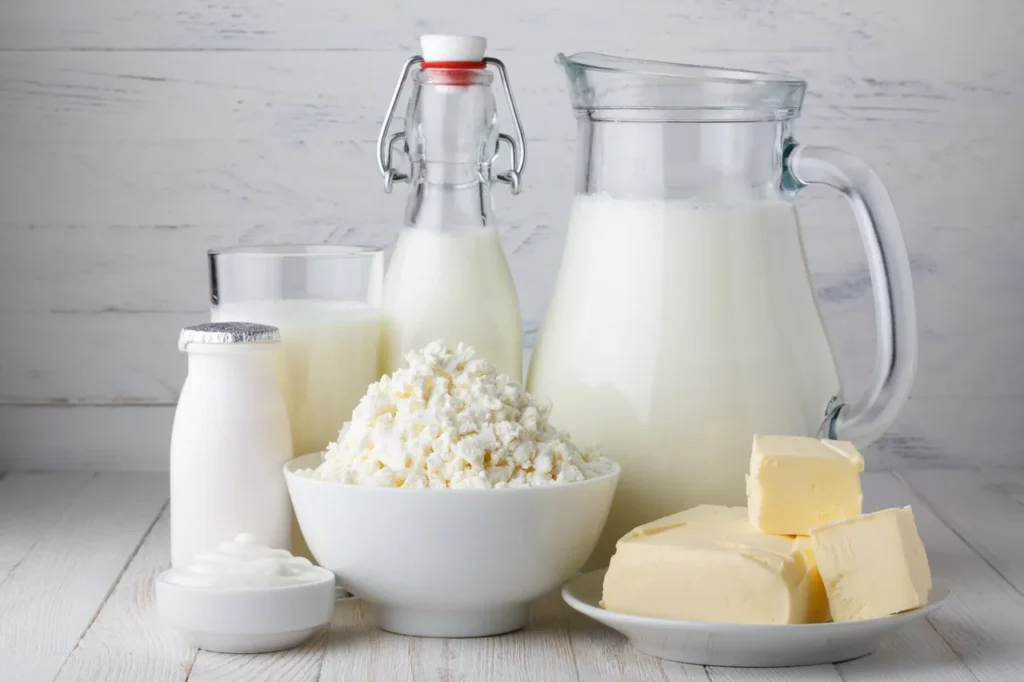
The FDA’s proposed revocation of 18 dairy standards of identity is reshaping regulatory compliance for online dairy sellers and the narrow window to act closes September 15, 2025.
You’re selling dairy products online. Your yogurt label says “yogurt.” Your cheddar says “cheddar.” Your acidified sour cream says what’s on the label. But in July 2025, the FDA proposed to revoke 18 standards of identity for dairy products including some of the exact products you’re selling. The new framework? If a standard is revoked, your product becomes nonstandardized. You can still use the traditional name yogurt, cheddar, sour cream, but only if it’s not misleading. That’s vague. And vagueness, in FDA compliance means risk. With a comment period open through September 15, 2025, and finalization expected in early 2026, online sellers have a narrow window to audit which of their SKUs are affected and what reformulation or relabeling they’ll need to do before the new rules take effect.
- 18 dairy standards Proposed for revocation in July 2025 affecting milk, yogurt, cheese, and frozen desserts
- 52 standards total Finalized for revocation across canned fruits, vegetables, and dairy products in July 2025
- September 15, 2025 Comment period deadline, FDA will not extend
- 250+ Total Standards of Identity currently maintained by FDA being systematically reviewed for modernization
Key takeaways:
- Audit urgency is real, Online sellers must identify which SKUs are affected by September 15, 2025 comment deadline, finalization is expected in early 2026.
- Misbranding risk rises, Product names and claims that imply traditional formulations no longer required by law can trigger FDA enforcement under misbranding provisions.
- Reformulation flexibility increases, Operators can now use alternative ingredients, processing methods, and formulations previously prohibited but only if product names and claims remain truthful.
What Are Standards of Identity and Why Are They Being Revoked?
Standards of Identity (SOIs) are FDA regulations that specify what ingredients, component proportions, and production methods certain food products must contain to use a particular name. They date back to 1939 and were originally designed to prevent economic adulteration and protect consumers from fraudulent labeling. A standard for cheddar cheese, for example, specifies the type and amount of milk, the processing method, aging period, and allowable additives. If a product doesn’t meet the standard, it cannot legally be called “cheddar.”
For decades, SOIs worked. But advances in food science, ingredient technology, labeling transparency, nutrition facts, ingredient lists, and consumer protection laws have made many SOIs redundant. Modern ingredient labeling and misbranding regulations now provide robust consumer protection without prescriptive formulation rules. Consequently, the FDA launched a systematic review to identify obsolete standards that constrain innovation without providing added consumer value.
On July 16, 2025, the FDA finalized revocation of 52 SOIs across multiple categories. On July 17, 2025, the FDA proposed revocation of an additional 18 dairy specific standards. The comment period is open through September 15, 2025.
Why Now?
The Trump Administration’s Executive Order 14192 Unleashing Prosperity Through Deregulation January 2025 directed agencies to eliminate unnecessary regulations. HHS Secretary Kennedy’s Make America Healthy Again (MAHA) directive has supported deregulatory initiatives across FDA. The timing is deliberate, modernizing SOIs fits this regulatory simplification agenda while, the FDA argues, maintaining consumer protection through existing labeling and misbranding standards.
The 18 Dairy Standards Proposed for Revocation
The FDA identified 18 dairy standards across three categories for potential revocation. Not all are major standards affecting everyday products, some are obscure. But the framework’s understanding of the categories helps online sellers assess whether their products are at risk.
Category 1:
Products With Little to No U.S. Market
These are standards for products that FDA research shows have minimal or no current market presence in the U.S. The agency’s logic, maintaining a standard for a product no one sells doesn’t promote honesty and fair dealing. Dairy standards in this category include acidified milk, acidified sour cream, Caciocavallo siliciano cheese, Cook cheese, Koch kaese cheese, Gammelost cheese, high moisture Jack cheese, Nuworld cheese, Samsoe cheese, and Sap sago cheese.
If you’re selling any of these specialty or international cheeses online, this category matters. If you’re selling mass market yogurt, milk, or standard cheddar, this category is less relevant. However, if you import or sell niche dairy products, verify your product isn’t in this list before September 15, 2025. For online dairy sellers focused on transparency, understanding market compliance and transparency standards becomes critical as SOI rules shift.
Category 2 & 3:
Redundant and Modernization Driven Standards
The FDA’s proposed rule references additional categories covering redundant overlapping standards and standards that constrain modern processing. Historical patterns suggest they include standards for products with modern alternatives already approved, standards with ingredient or processing restrictions that newer FDA guidance has superseded, and standards that conflict with other modernized dairy standards like the updated yogurt standard from 2021. Audit Checklist for Affected Products, before September 15, 2025, audit your dairy product inventory:
- Do any of your SKUs use the obscure dairy standards listed in Category 1?
- Are any of your products labeled as “acidified” milk or sour cream, or use specialty cheeses?
- Does your product formulation rely on prescriptive ingredient requirements that might be outdated?
- Have your product names or claims remained unchanged while FDA guidance on dairy has evolved?
- Are there gaps between your traditional product claims and your actual formulation?
What Happens When a Standard Is Revoked, The Shift to Nonstandardized Foods
When the FDA revokes a standard of identity, a product that previously met that standard becomes a nonstandardized food. This sounds ominous but doesn’t mean your product is suddenly non-compliant. Here’s what actually changes,
Before Revocation (Standardized Food)
Products must meet specific formulation requirements (e.g., cheddar cheese must contain at least 50% milk fat, be aged 60 days). Product name is protected only genuine cheddar can be called cheddar. Ingredient list is simplified or implicit if it’s cheddar, the FDA knows what’s in it.
After Revocation (Nonstandardized Food)
Formulation rules no longer apply. Products can use the traditional name e.g., cheddar, if the name is not misleading. Full ingredient transparency is required must list every ingredient, even if traditional. Regulatory analysis shifts from prescriptive formulation to misbranding standards.
The Critical Implication, Misbranding Risk Rises
When a standard is revoked, the FDA no longer enforces the compositional requirements that defined the product. Instead, it evaluates whether the product name and claims are truthful and not misleading. This is where online sellers face the most risk.
Example 1:
Yogurt (Already Modernized)
The yogurt standard was amended in 2021 and 2023, allowing for broader ingredient flexibility, alternative sweeteners, fat containing flavors, etc. If yogurt were fully revoked, operators could reformulate even more freely, but the name “yogurt” would still require that the product meet basic yogurt characteristics of fermented dairy, specific cultures. For guidance on navigating this complexity, online dairy sellers should understand the current yogurt landscape. For sellers of specialty or raw dairy products, understanding the legal and labeling requirements to sell raw milk online becomes essential as standards shift.
Example 2:
Acidified Sour Cream (Proposed for Revocation)
If this standard is revoked, an operator could theoretically make “sour cream” with alternative ingredients or processing methods. But the name sour cream implies a certain product character. If the product doesn’t deliver that character taste, texture, acidity, the name is misleading.
Misbranding Red Flags
After a standard is revoked, your product is potentially misbranded if your product name implies a traditional formulation you no longer use, your product claims contains live cultures, aged 60 days are no longer true, your formulation has changed so significantly that the name is deceptive to consumers, or you’ve used reformulation flexibility to strip out key ingredients without updating the product name or claim. The FDA doesn’t specify enforcement timelines, but misbranding is an active enforcement priority. Online sellers without clear audit protocols are exposed.
Why Modernization of SOIs Matters for Online Sellers
The shift from prescriptive standards to misbranding based compliance creates both risk and opportunity. Understanding the difference is critical for 2026 planning.
Opportunity, Reformulation Flexibility
Operators can now use alternative ingredients, processing methods, and formulations previously prohibited. Dairy producers can use ultrafiltered milk in cheese and yogurt without conflicting with traditional standards. Makers of acidified dairy products can explore alternative culturing methods. Specialty cheese producers can experiment with ingredient combinations previously restricted.
This flexibility allows innovation and potentially new products. For operators interested in selling artisan cheese online, the SOI revocations open new formulation possibilities but only with clear labeling and claims alignment.
Risk:
Increased Misbranding Exposure
With prescriptive standards gone, regulatory analysis shifts to whether product names and claims are misleading. This is more subjective than does it meet the standard. Online sellers must now make an affirmative case that their product name is truthful.
For products sold online, where consumers can’t inspect or taste before purchase, misbranding risk is heightened. Claims that sound traditional but no longer apply like aged in the traditional method when formulation has changed are especially risky. For operators new to online dairy sales, understanding the foundational compliance requirements for selling dairy online ensures labeling accuracy from day one.
Step by Step Audit Framework for Online Dairy Sellers Online sellers need a systematic audit process before September 15, 2025 comment deadline and before early 2026 finalization. Here’s a step by step framework:
Step 1:
Inventory Your Dairy SKUs
List every dairy product you sell online. For each, note the product name and category, yogurt, cheese, milk, sour cream, etc., current formulation key ingredients, processing method, current label claims aged, live cultures, low sodium, etc. And market position specialty/niche vs. mass market.
Step 2:
Cross Reference Against Revoked Standards
Check whether your products match any of the 18 dairy standards proposed for revocation. The FDA’s notice identifies specific categories. Acidified milk or acidified sour cream mean high risk if you sell these. Specialty cheeses (Nuworld, Samsoe, Sap sago, etc.) mean high risk if you carry imports. Low sodium cheddar, low sodium Colby mean moderate risk if you offer reduced sodium variants.
Step 3:
Assess Formulation vs. Label Alignment
For each at risk product, compare your actual formulation to your label claims. Ask: Does your formulation match the traditional standard for that product? If not, does your label accurately reflect the difference? Does your product name imply a traditional formulation you no longer use?
Step 4:
Identify Misbranding Risk
Evaluate each product for misbranding risk. This includes claims that no longer apply e.g., aged 60 days if you changed production, ingredient shifts not reflected in the label e.g., if you switched to an alternative milk source, and names that imply traditional characteristics your product may no longer have.
Step 5:
Plan Reformulation or Relabeling
For each at risk product, decide reformulate to align with traditional standards, or relabel to accurately reflect new formulation?
If reformulated, the timeline is tight Q4 2025–Q1 2026. Ingredient sourcing, testing, and supply chain coordination take time. For guidance on interstate dairy shipping and product regulations, operators should map distribution channels and regional compliance requirements. For subscription and DTC models, reformulation also affects cold chain economics; understanding dairy subscription logistics and spoilage costs helps model the financial impact of formulation changes.
If relabeling, Simpler but requires accuracy. A label that says alternative culture sour cream or ultra filtered milk yogurt is compliant if truthful.
Step 6:
Engage Regulatory Counsel
For ambiguous cases is your product name misleading after the standard is revoked?, consult a regulatory attorney. The cost of a legal review $2K–$5K is much lower than the cost of a recalled product or FDA enforcement.
The Plant Based Dairy Factor and Competitive Implications
The SOI revocations are happening in parallel with ongoing FDA and FTC enforcement against plant based dairy alternatives that inappropriately use dairy terminology. This is context for online sellers of both traditional and alternative dairy products.
National Milk Producers Federation (NMPF) has pushed for stricter enforcement against non-dairy beverages labeled to suggest dairy equivalence. The FDA has acknowledged this issue. While SOI revocations technically give more flexibility to traditional dairy producers, they’re also part of a broader move toward stricter misbranding enforcement overall.
For online sellers selling plant based dairy alternatives, make sure product names and claims don’t mislead about dairy content, nutritional equivalence, or production methods.
For online sellers of traditional dairy, the revocations give you reformulation flexibility, but misbranding risk also rises if your claims imply traditional standards you no longer meet. Understanding the competitive positioning of raw milk vs pasteurized dairy and how consumer perception shapes compliance becomes critical.
Regulatory Timeline and Enforcement Expectations
The FDA’s modernization of SOIs signals a shift in enforcement priorities. As regulatory experts have noted, the FDA’s ongoing revocation and modernization of Standards of Identity will continue to reduce prescriptive formulation rules, shifting regulatory analysis toward misbranding and consumer perception standards. This increased flexibility comes with heightened compliance and litigation risk where product names or claims imply traditional formulations that no longer apply.
Timeline Milestones
- September 15, 2025, Comment period closes, no extensions
- Late 2025 / Early 2026, FDA reviews comments and finalizes rule
- Q1 2026, Compliance expected though FDA may stagger implementation for specific standards)
- 2026+, FDA continues systematic review of remaining 230+ SOIs
Enforcement Expectations
The FDA has not specified enforcement timelines or deadlines, but once a standard is revoked, the agency ceases to enforce previous compositional requirements. Enforcement then shifts to general misbranding standards. For online sellers, this means greater scrutiny of product names and claims.
FAQS
If you answer yes to any, your product may be affected by the revocations.
No. Revocation of a standard of identity doesn’t make your product non-compliant. It removes the prescriptive formulation requirements. Your product becomes nonstandardized, but it can still use the traditional name (yogurt, cheese, etc.) as long as the name is truthful and not misleading. Compliance shifts from meeting formulation standards to meeting general misbranding standards. You must ensure your product name and claims are accurate.
Which dairy products are definitely being revoked?
The 18 dairy standards proposed for revocation include obscure products Nuworld cheese, Sap sago, Gammelost and specialty items acidified milk, acidified sour cream, low sodium cheddar and Colby. If you sell mass market yogurt, milk, standard cheddar, or mozzarella, your product is likely not on the revocation list. Check the Federal Register notice Docket FDA 2025 N 1225) for the complete list. If you sell niche or international dairy products, verify with regulatory counsel.
What’s the timeline for compliance?
The comment period is open through September 15, 2025. The FDA will review comments and finalize the rule in late 2025 or early 2026. Once finalized, compliance is expected shortly after Q1 2026. You should complete your audit and begin any necessary reformulation or relabeling by Q4 2025 to avoid scrambling after the rule is final.
If I don’t change my product but the standard is revoked, will I get fined?
Not automatically. Your product becomes nonstandardized but can retain its traditional name if truthful. However, if your product name or claims become misleading because the formulation no longer matches traditional expectations, you could face FDA enforcement under misbranding provisions. The best protection is to audit now, identify risks, and address them proactively.
Can I use the SOI revocation to reformulate my product with cheaper ingredients?
Yes but only if the reformulated product name isn’t misleading. If you switch to lower cost milk sources or alternative processing, you can do so, but your product name and label must accurately reflect the change. A label that says traditionally made yogurt but uses non-traditional processing could be misbranded. Consult regulatory counsel if you plan significant reformulations.
What’s the difference between a standardized and nonstandardized dairy food?
Standardized foods must meet specific FDA formulation requirements. Nonstandardized foods have no prescriptive formulation rules but must have transparent labeling and truthful names. After an SOI revocation, your product shifts from standardized to nonstandardized, giving you more formulation flexibility but requiring greater transparency and claim accuracy.
Conclusion
The FDA’s dairy standards of identity modernization is not a future risk. It’s an active regulatory event reshaping the compliance landscape right now. For online dairy sellers, the shift from prescriptive standards to misbranding based compliance creates both opportunity and risk. The brands that preserve margin and positioning are those that treat the transition by strategically auditing their inventory now, identifying at risk SKUs before September 15, 2025, and planning reformulation or relabeling before compliance deadlines in early 2026.
Operators selling dairy products through subscription models or direct-to-consumer channels face especially acute risks. Direct consumer relationships mean customer expectations about yogurt, cheese, or sour cream are high. Any mismatch between product name and formulation could trigger returns, reviews, or regulatory action. For DTC dairy brands operating at scale, understanding the transparency and market dynamics of direct to consumer dairy sales helps navigate both SOI compliance and competitive positioning simultaneously.
Your regulatory timeline is clear. Your audit framework is documented. The comment deadline is September 15, 2025. The only question left is whether you’re conducting your audit in Q3 2025 early and strategic or waiting until Q4 2025 rushed and reactive. Start now.
