
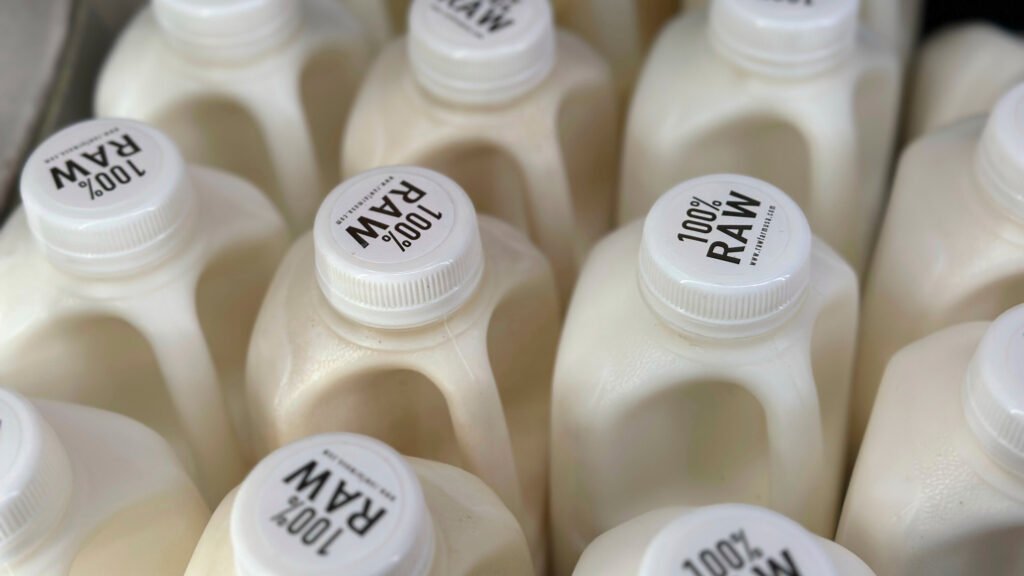
With state legalization accelerating, raw milk producers can now sell directly to consumers but federal bans, labeling traps, and liability risks demand operator level preparation before you launch.
Your state just legalized raw milk sales. Your herd meets the standards. Your customers are ready. But listing it on your ecommerce platform or launching a delivery network comes with a maze of state specific regs, a hard federal wall on interstate commerce, and liability landmines that feel hidden until they’re not.
- 32 states Now allow raw milk sales in some form (up from 30 in 2024)
- 3 major states Rewrote raw milk laws in 2025 alone (Arkansas, Utah, North Dakota)
- 17.6% Raw milk market sales growth in 2024 (Circana data)
- ~30% of dairy product recalls Now involve raw milk consumption Dairy foods
Key takeaways:
- Legalization in your state does not mean unrestricted online sales DTC specific compliance requirements differ significantly from on farm direct sales
- Federal law (21 CFR 1240.61) bans all interstate raw milk shipments, even between two states that both allow sales
- Pre launch audit of testing pathways, labeling templates, geofencing, and liability insurance is non-negotiable before your first online order
The State Legalization Landscape, What Changed (and When)
Thirty two states now allow raw milk sales in some form. That’s not the news. The news is where that legalization is heading.
Arkansas, Utah, and North Dakota all enacted new raw milk laws in 2025, and critically, they specifically expanded direct to consumer delivery authority. Arkansas amended HB1048 to allow raw milk producers to sell directly to consumers via delivery from the farm, a meaningful shift from on farm only sales that dominated earlier state frameworks. Colorado passed SB24-043 in 2024 authorizing DTC sales at farms, consumers’ residences, farmers markets, and roadside markets. Hawaii legalized direct consumer raw milk and raw milk products in 2025, with a July 1 effective date. These aren’t restatements of old policy. They’re enabling language for a channel that didn’t exist in regulation before.
The expansion matters because the DTC dairy market is accelerating. According to recent market data tracking, consumer demand for direct-sourced dairy products has shifted operator priorities from wholesale partnerships to owned channels and raw milk fits squarely into that vertical. Circana reported raw milk sales skyrocketed by 17.6% in 2024. The momentum is real. The regulation, finally, is catching up.
But here’s the catch, legalization in your state does not mean unrestricted online sales. The operators who move fastest are not the ones reading a state law and assuming compliance is automatic. They’re reading the law, then calling their state dairy board to understand what direct to consumer actually means operationally. Because farm sales are typically unregulated in many states, farmers market sales are usually permitted under certain conditions, and online DTC delivery is often still restricted or newly permitted, the compliance burden looks completely different.
The Patchwork, who allows what state raw milk frameworks break down into four broad categories, though the lines are increasingly blurry as states add delivery and online specificity to their laws:
States permitting retail outlet sales:
12 states, high visibility but not DTC primary, California, Idaho, Nevada, Arizona, Pennsylvania, South Carolina, Maine, New Hampshire, Washington, Utah, Colorado, and Massachusetts have some form of retail or permitted sales pathway, but not all allow direct DTC delivery. These states tend to have the highest testing and certification requirements.
States permitting delivery or farmers market sales:
emerging category, 2024-2025, Arkansas, Colorado, Hawaii, North Dakota, and Massachusetts now explicitly allow delivery from farm or delivery to consumer residences. These are your DTC expansion opportunities, if you meet state testing and registration requirements.
States allowing herd share models only:
diminishing but present. Some states legally permit herd shares membership based milk purchase arrangements but not direct sales. This creates an operational and compliance difference technically, the consumer owns a fractional animal and receives its milk, which is a different contractual structure than direct purchase.
States with outright bans:
18 states, enforcement varies. Raw milk sales remain prohibited. But enforcement varies dramatically, some states have minimal enforcement, others actively pursue violations.
The key operational question: is DTC delivery specifically authorized in your state? That’s different from “raw milk sales are legal.” You need to know whether your state’s law permits
(a) delivery to the farm.
(b) delivery to the consumer’s residence.
(c) delivery via third party logistics.
(d) whether there are geographic restrictions on delivery radius, in state only, etc.
One raw milk producer in Colorado can ship to any in-state address under SB24-043.
One raw milk producer in a herd share only state cannot. Know which one you are before listing anything online.
The Federal Interstate Ban, What It Actually Blocks
This is where operational reality hits hardest.
Federal law 21 CFR 1240.61, established in 1987, prohibits the transport of raw milk for human consumption across state lines. This is absolute. It applies regardless of whether both states permit raw milk sales. It applies regardless of whether the consumer has already purchased the product in one state and wants to transport it across the border the consumer can do this personally, a producer cannot ship it. It applies regardless of whether the shipment is labeled as pet food or animal feed or anything else. Federal law, not state law, governs interstate commerce. interstate dairy shipping products by state That means a raw milk producer in Arizona cannot ship to a raw milk consumer in California, even though both states allow sales.
A producer in Maine cannot ship to a raw milk buyer in Vermont, even though Vermont legalized raw milk in 2023. One out of state order, one geofencing mistake, one customer who moved across state lines while maintaining their subscription breaks this rule.
The FDA has enforced this steadily. In 2016, a Listeria outbreak traced to raw milk from Pennsylvania dairy operator Amos Miller killed one person in Florida and sickened another in California. The outbreak triggered years of federal litigation and a 2023 consent decree requiring Miller’s farm to comply with state regulations. In January 2024, Miller’s operation was raided by state authorities related to raw milk sales without a permit and out of state shipments. The consequences have been substantial farm suspension, legal fees, and operational disruption.
More recently, in 2024, raw milk producers in California and South Carolina received FDA warning letters for facilitating interstate sales through co-ops and online ordering systems that allowed out of state customers to purchase. The agency views this as circumventing the ban. Your platform cannot allow it, period.
This is the part worth sitting with your geofencing must be airtight. If your checkout system permits a customer in an adjacent state to place an order, that order violates federal law. The liability is yours, not the platform’s. This is why many mainstream ecommerce platforms (Shopify, WooCommerce, Square) have no built in raw milk compliance guardrails. You’re building custom logic to enforce a federal restriction. That’s not something a template handles.
Testing, Certification & Producer Registration: Your Operational Checklist
State level testing and producer registration requirements vary so dramatically that “raw milk legal” is almost meaningless without state specific verification.
Most states that allow raw milk sales establish microbiological standards typically a limit on coliform bacteria often 10 CFU/mL or lower and a requirement for pathogen absence E. coli, Salmonella, Listeria. But the testing pathway, certification process, lab accreditation, and sample frequency differ by state.
Some states require monthly testing at an approved laboratory. Others require per batch testing. Some allow on farm testing with state approved equipment. Others require third party lab certification exclusively. Some states cap the size of operation e.g., Hawaii caps raw milk dairy operations at 10 milk bearing animals. Others establish no herd size cap but do establish facility standards. A state might require licensed dairy processors to oversee raw milk handling, another state might exempt raw milk producers from dairy licensing entirely.
This is why calling your state dairy board or health department before scaling production is essential. You cannot assume a neighboring state’s pathway applies to yours. You cannot assume an online forum’s guidance from two years ago is current Colorado’s SB24-043 was just signed in 2024, North Dakota’s raw milk law was updated in 2025. And you cannot assume your certification carries across state lines if you expand.
The producer registration piece is equally critical. Most states that permit DTC sales now require producer registration with the state dairy board or health department. Registration timelines vary, some states issue registration in weeks, others take months. Some require on-site inspection before approval, others allow remote registration. Some allow retroactive registration after you’ve already begun selling, others require pre approval.
Document these three items before launch:
- State approved testing laboratories name, contact, turnaround time, cost per test
- Microbiological standards specific to your state coliform limit, pathogen requirement, test frequency
- Producer registration timeline and required documentation application form, farm inspection requirements, facility standards, labeling templates
Not having these documented is the #1 choke point that delays DTC launch by 6-12 weeks when discovered mid production.
Labeling, Warnings & Liability, The Fine Print That Costs
State mandated warning labels for raw milk vary in substance and legal enforceability.
The FDA’s model warning:
This raw (unpasteurized) milk may contain disease causing organisms that appear in many states. But states increasingly establish their own mandatory language. Pennsylvania requires specific warning language. California establishes coliform limits tied to testing results. Massachusetts has delivery specific labeling rules that differ from on-farm sale labeling.
The operative risk:
a label that complies with state law in California may not comply with state law in Nevada (if you operate across states or expand). A label you design for farmers market sales may not legally suffice for online DTC delivery, even in the same state. And here’s the compliance trap, you cannot use a template. You cannot rely on your platform’s default warning text. You must have a legal review of your state specific labeling before you print or list it online.
This is why liability waiver enforceability matters. Some states allow producers to cap liability through waiver language on the label or at point of sale. Others do not the state explicitly forbids liability waivers. A few states limit producer liability to product replacement or refund only, capping exposure. Others impose no cap, leaving producers exposed to full liability claims for illness or injury.
Here’s what matters operationally, your label is not just a compliance checkbox. It’s your first line of liability defense. If your waiver language is not enforceable in your state, every customer becomes an uncapped lawsuit risk. This is why engaging a dairy attorney to draft state specific label language and liability waiver is not optional. It’s infrastructure.
Cold Chain, Delivery & Logistics Compliance
Temperature control during shipping is not a best practice for raw milk. It’s a legal requirement, and state rules vary.
Most states that permit DTC delivery establish specific temperature thresholds typically raw milk must be maintained at 45°F or below during transport and delivery. Some states impose tighter standards (40°F). Some states require ice packs or reefer transport for any shipment over a certain distance. Some states mandate delivery within X hours of production. A few states explicitly require insulated packaging or specify packaging material standards.
The cold chain documentation requirement is where many operators stumble. If a customer receives raw milk that has gone above the required temperature, or if a recall occurs and you cannot prove temperature maintenance during shipment, you’ve violated state law. Some states now require temperature logs or monitoring devices. Others require shipper affidavit forms. A few states are beginning to require GPS tracked delivery documentation.
This is different from standard ecommerce cold-chain logistics. A typical DTC food business might use FedEx ground or UPS cold chain services. But raw milk shipping in most states cannot use standard third party logistics, the temperature requirements are tighter, the documentation is more rigorous, and most third-party carriers explicitly exclude raw milk from their liability coverage.
That means you’re building custom logistics. You’re coordinating with cold chain shippers who specialize in raw milk. You’re documenting every shipment with temperature logs or monitoring devices labor intensive. You’re training your team on cold chain protocol and establishing a recall procedure time consuming. This is why, in practice, many raw milk producers either stay on-farm only no shipping logistics, or use subscription models with fixed delivery windows to optimize cold chain efficiency.
The cost math is real, cold chain shipping for raw milk can run $30-80 per shipment depending on distance and reefer requirement. For a $30-50/gallon retail raw milk product, that shipping cost may eliminate margin on small orders. Your DTC model needs to account for this minimum order size, subscription pricing, or delivery radius restrictions delivery only within X miles become necessary to make the unit economics work.
Platform & Marketplace Readiness
Standard ecommerce platforms do not have built in raw milk compliance. Shopify, WooCommerce, Big Commerce, Square none of these platforms have raw milk specific product settings or compliance templates. This means custom configuration falls entirely on you. What you need to build or configure.
State geofencing logic:
Your checkout must validate the customer address against your state only. If a customer’s billing or shipping address is outside your state, the system must either block the order or display a warning and require affirmation. This is not a Shopify setting. You’re building or configuring this with custom code or third party apps if they exist, they’re rare.
Product description restrictions:
Mainstream platforms allow broad health claims in product descriptions e.g., a great source of protein, supports immune health. Raw milk production and sale, in many states, prohibits health claims. You cannot state that raw milk is easier to digest, that it supports immunity, or that it treats any condition. Your product description must stick to factual information e.g., grass fed raw whole milk, produced on farm name, tested at lab name on date. Audit your platform’s T&Cs Some platforms restrict what you can claim about food products, others leave you to comply with law. Either way, you’re responsible for compliance, not the platform.
Labeling template integration:
Your platform must make state mandated warning labels and safe handling instructions visible to customers before purchase and on every shipment. This might be a downloadable PDF, a print on demand label system, or an automated email template. You’ll need to verify that whatever system you use is accurate, current if state rules change, and legally compliant.
Payment processor approval:
Some payment processors restrict raw milk transactions due to higher chargeback or compliance risk. Stripe, Square, and PayPal’s T&Cs vary; some explicitly require evidence of state licensing and compliance before approving raw milk merchants. You may need to work with a specialty processor or food focused payment partner. Verify this before building your entire checkout flow.
Age or verification restrictions:
Some states require age verification or identity confirmation for raw milk DTC purchases usually to confirm in state residency. If your state requires this, your platform must support it. Most standard checkout flows don’t include this step; you’ll need custom logic or third party verification integration.
Most operators discover these gaps mid launch and face 4-6 weeks of additional configuration. The alternative, audit your platform’s capabilities against your state’s requirements before signing contracts or building inventory.
Liability, Insurance & Legal Exposure
Liability for raw milk illness or injury varies dramatically by state, and insurance availability is limited.
Some states (California, South Carolina, Maine) have begun capping producer liability or establishing liability waivers as legally enforceable. Others have no cap and treat raw milk producers like any other food business exposed to full liability claims. A few states have established indemnification language that protects producers from certain claims if they comply with labeling and safe handling regulations. Most states, though, have no specific raw milk liability framework. You’re covered under general food liability law, which can be broad.
Raw milk specific liability insurance is harder to find than you’d expect. Many standard food liability carriers explicitly exclude raw milk from coverage or require separate underwriting with higher premiums. Some specialty insurers (Markel, certain farm focused carriers) offer raw milk coverage, but it often comes with conditions: proof of state licensing, documented testing results, liability waiver language, recall insurance included.
The coverage cost is material. A $1-2M liability policy for a raw milk producer might run $3,000-8,000/year depending on production volume and risk profile. For a small producer under 50 gallons/week, this can represent 10-20% of gross revenue. For a mid-size operation 500 gallons/week, it’s 1-3%. Either way, it’s a line item that changes the unit economics of DTC raw milk sales.
Recall costs are often underestimated. If one batch tests positive for a pathogen, a state health department or the FDA may order a recall. That recall triggers notification to all customers who purchased that batch you must maintain customer records with purchase dates and batch numbers, potential media coverage, potential criminal investigation (if illness or death occurs), legal defense, and lost inventory value. A single recall for a 100-gallon production run can cost $5,000-15,000 in notification, investigation, and legal fees. Larger recalls or outbreak-linked recalls can cost multiples of that.
This is why establishing a recall procedure before launch is non-negotiable. You need to know, in advance:
(1) how to trace which customers received which batch
(2) how to notify customers quickly
(3) what your state’s recall protocol is
(4) whether your insurance covers recall costs
(5) how you’ll communicate with the health department.
Five Step Pre-Launch Readiness Checklist
1. Verify State Legality & DTC Authorization
Research your state’s raw milk law and confirm DTC sales, not just on farm sales are explicitly permitted. Check for recent amendments, particularly 2024-2025 updates. If your state recently legalized raw milk, the DTC specific pathway may still be in the rule making phase not yet finalized. Call your state dairy board or health department to confirm DTC delivery is permitted and ask specifically can I ship to in-state customers’ residences? Can I use third party logistics? Can I use an online ordering platform?
2. Map Testing, Certification & Producer Registration Requirements
Contact your state dairy board to understand.
(1) which testing labs are approved.
(2) what microbiological thresholds apply coliform limit, pathogen standards.
(3) how often you must test per batch, weekly, monthly.
(4) what producer registration looks like application timeline, inspection requirements, documentation.
(5) whether compliance with state requirements satisfies federal oversight or if additional USDA registration is needed.
Do not assume your neighbor’s certification pathway applies to you. Do not assume outdated online guidance is current. Get official confirmation in writing if possible.
3. Audit Interstate Sales Exposure
Review your DTC platform settings to confirm geofencing is properly configured. Test it, can a customer from an adjacent state add a product to cart? Can they proceed to checkout? If the answer is “yes” to either, your platform has a security gap. Configure geofencing to block out of state orders or to display a mandatory warning and require customer affirmation that they are an in-state resident. Verify this before accepting a single order.
4. Draft Compliant Labeling & Liability Waiver
Engage a dairy focused attorney to produce:
(1) state mandated warning label word for word accurate per your state’s law
(2) safe handling instructions
(3) liability waiver language enforceable in your state,
(4) customer T&Cs for DTC sales.
Have legal review of your platform product descriptions, checkout confirmation emails, and any marketing material that mentions raw milk.
The cost of legal review typically $1,500-3,000 is vastly cheaper than a mislabeled product or unenforceable waiver that becomes a liability.
5. Secure Liability Insurance & Establish Recall Protocol
Obtain raw milk-specific liability insurance from a carrier experienced in dairy production. Confirm the policy covers DTC sales some policies cover on farm sales only. Map your recall procedure, traceability from production batch to customer order to notification, establish a recall worksheet with state agency contact info, notification templates, and press protocols, identify a recall insurance add on if available.
Test this procedure before launch. A dry run of your recall protocol should take 2-4 hours and should identify gaps you can fix now, not during an actual crisis.
FAQS
Can I ship raw milk to customers in neighboring states where it’s also legal?
No. Federal law (21 CFR 1240.61) bans all interstate raw milk sales for human consumption, regardless of whether both states permit it. You can only sell to customers within your state. Violating this rule invites FDA enforcement action. Your platform must geofence orders to your state only. This is the single most common compliance gap for new raw milk DTC producers.
What happens if a customer gets sick from my raw milk and can they sue me?
It depends on your state. Some states cap producer liability for raw milk California and a few others most states don’t. Your liability waiver enforceability also varies by state, a waiver that’s unenforceable in your state provides zero legal protection. This is why state specific legal review of your waiver language is non-negotiable before launch. Without proper waiver language, a single customer illness could expose you to significant liability.
Do I need a special ecommerce platform designed for raw milk?
No dedicated raw milk ecommerce platform exists. Shopify, WooCommerce, and other mainstream platforms have no built in raw milk compliance. You’ll need to configure geofencing, labeling workflows, and compliance messaging yourself or through custom development. This is not a standard feature.
How often do I need to test my raw milk before selling it online?
Your state sets the frequency, typically per batch or per week. Check your state dairy board’s rules directly. Some states require third party lab certification, others allow on farm testing. Do not guess. A failed test can suspend your license and wreck your DTC season.
What if my state has a herd share model instead of direct sales?
Some states still only allow herd shares where customers own a fractional animal and receive its milk. Others have opened up direct sales only recently (Arkansas, Colorado, Utah). Know which model your state legally permits. Blending herd share and direct sale language or ignoring the distinction can trigger enforcement action from your state health department.
Conclusion
Raw milk legalization is expanding, but expansion does not mean deregulation. The operators who convert legality into sustainable revenue are the ones who treat compliance as a pre-revenue investment, not an afterthought. They audit their state’s specific rules. They verify that their platform’s capabilities support cold chain documentation and geofencing requirements. They secure liability insurance before the first order ships. They don’t launch until they’ve established a recall procedure and confirmed their labeling is legally defensible.
The market is real. Raw milk sales grew 17.6% in 2024. Consumer demand is accelerating. And state legislatures are continuing to expand DTC specific language in raw milk regulations. Dairy transparency market share, but the federal interstate ban is absolute. State testing and certification requirements are non-negotiable. Labeling and liability exposure are serious. A single compliance gap, one mislabeled shipment, one out of state order, one untested batch can trigger enforcement, suspension, or lawsuit.
Your pre-launch work is not paperwork. It’s your foundation. Build it correctly, and you have a legitimate, defensible business. Rush it, and you have exposure you didn’t anticipate. Map your state’s rules. Audit your platform. Secure insurance. Launch compliant. That’s the operator’s path forward in the raw milk expansion.
